Basic Biomedical Engineering
Bio-fluid Mechanics
Provide a basis for understanding biological fluid behavior for engineering design and control of fluid systems.
- MCQs
- 79
- Sources
- 15
- Blueprint items
- ~6
- Handbook
- Chapter 3
Blueprint study path
Basic Biomedical Engineering carries ~20% of the national exit exam. Target ~6 blueprint outcomes for Bio-fluid Mechanics before moving to timed mixed practice.
- Read materials summaries (overview → key concepts → standards).
- Review distinction pairs below—exit items often swap near-miss terms.
- Practice MCQs with figures enabled; read full structured rationales.
- Revisit visual schematics for laws, safety, and regulatory flows.
Concepts to distinguish
BernoullivsPoiseuille
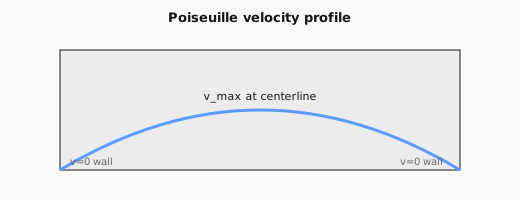
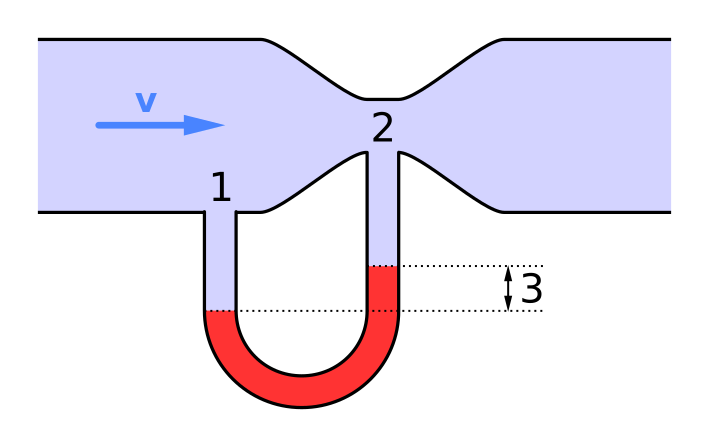
Bernoulli links pressure and velocity along a streamline; Poiseuille gives volumetric flow in a tube (Q ∝ r⁴).
LaminarvsTurbulent
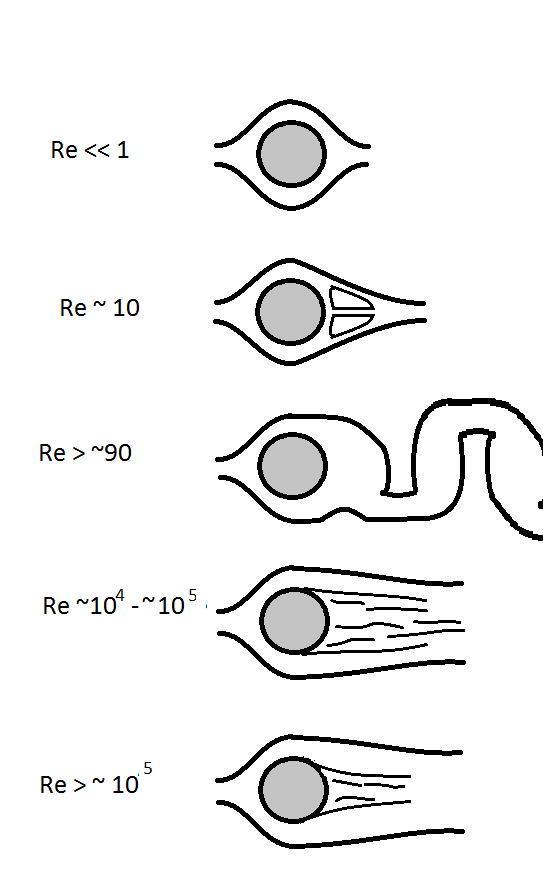
Reynolds number compares inertial to viscous effects; transition depends on geometry and fluid.
Visual schematics for this theme
These assets auto-attach to MCQ explanations when stem and rationale match blueprint patterns.
Poiseuille flow velocity profile
Bernoulli venturi application
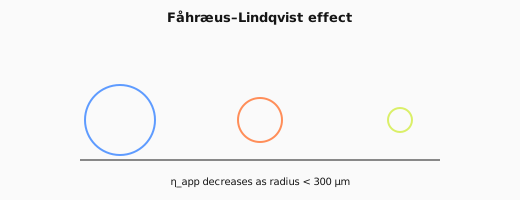
Fåhræus–Lindqvist effect
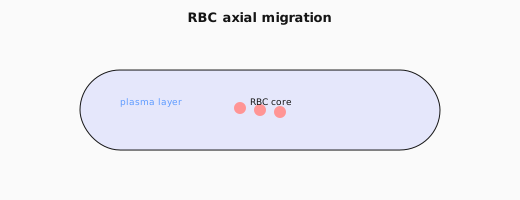
RBC axial migration
Flow regime transitions
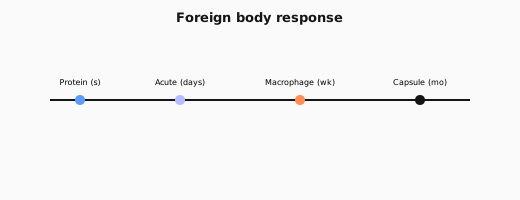
Foreign body response timeline
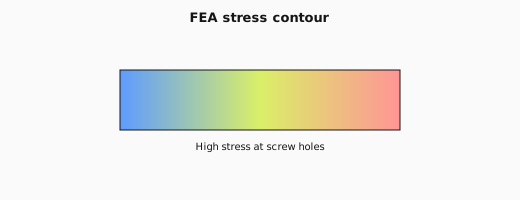
Bone plate stress contour
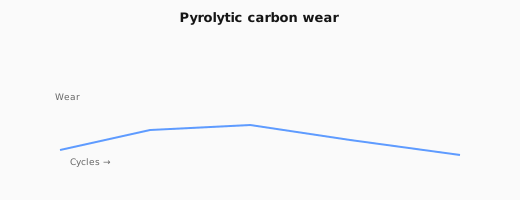
Pyrolytic carbon valve wear
Question bank mix
- PDF bank
- 53
- Telegram
- 22
- Mock 2025/26
- 4
- Other
- 0
Themes in mapped MCQs: Basic Biomedical Engineering · Cross-cutting
Open full MCQ practice for cross-course items.